How Mobile Phones and Podcasts Can Improve English Learning and Soft Skills
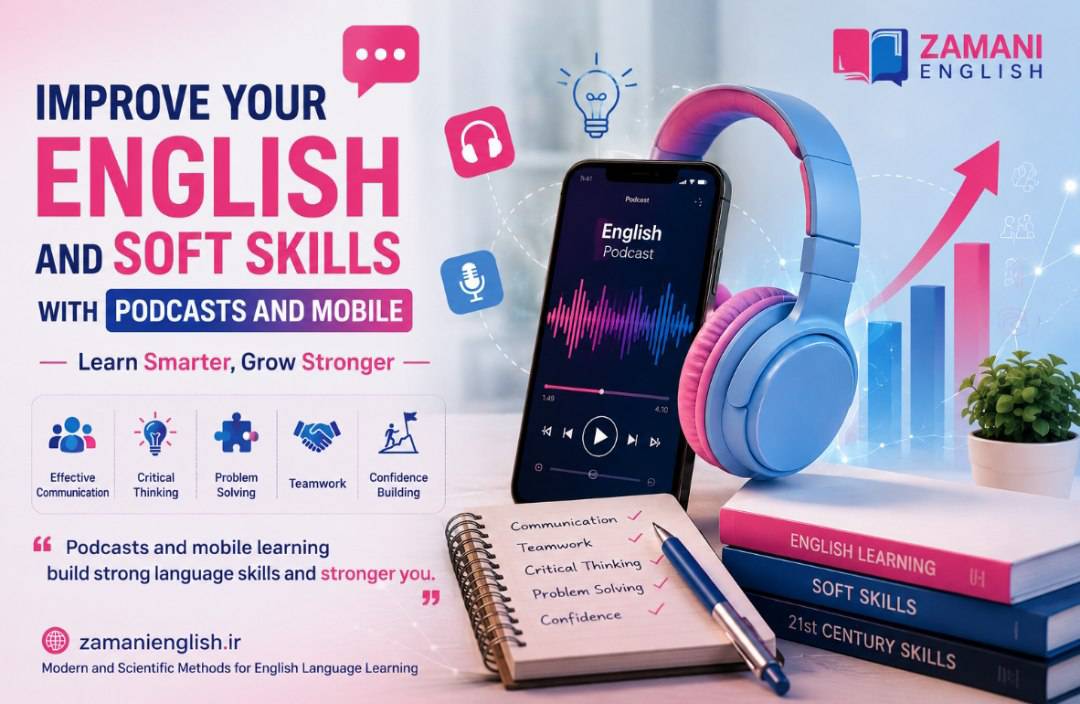
Technology has become an essential part of modern education. Tools such as mobile phones and podcasts, once used mainly for communication and entertainment, are now recognized as valuable resources for language learning. Recent studies suggest that when used purposefully, these technologies can improve not only language proficiency but also important soft skills.
?What Are Soft Skills
Soft skills are personal and interpersonal abilities that help individuals succeed in academic, social, and professional environments. Communication, teamwork, problem-solving, critical thinking, creativity, and self-confidence are among the most important soft skills in today’s world.
Employers increasingly recognize that professional success depends not only on technical knowledge but also on the ability to communicate effectively and collaborate with others.
?Why Are Podcasts Effective for Language Learning
One of the greatest advantages of podcasts is their ability to expose learners to authentic language. Through podcasts, learners hear natural pronunciation, real conversations, and practical vocabulary used in everyday communication.
Research has shown that regular exposure to educational podcasts can improve listening comprehension, expand vocabulary, enhance pronunciation, and increase confidence in speaking. Podcasts also provide flexibility, allowing learners to study anytime and anywhere.
The Role of Mobile Phones in Language Learning
Mobile phones should not be viewed merely as sources of distraction. Their educational value depends largely on how they are integrated into the learning process.
Teachers can use mobile phones for a wide range of educational activities, including audio recording, video projects, collaborative tasks, peer feedback, and out-of-class practice.
For example, learners can record short presentations or storytelling activities and listen to their recordings to identify strengths and areas for improvement. This process promotes both language development and self-awareness.
Developing Soft Skills Through Technology
Research suggests that technology becomes most effective when it encourages interaction, collaboration, and reflection.
Mobile-based group projects can strengthen teamwork and responsibility. Recording and reviewing audio or video performances can improve self-assessment skills, while providing feedback to classmates helps develop critical thinking and effective communication.
The Teacher’s Role
Technology alone does not guarantee successful learning. Teachers continue to play a crucial role in designing meaningful activities, selecting appropriate resources, and guiding learners toward productive use of technology.
In other words, the success of technology-enhanced learning depends more on pedagogy than on the technology itself.
Conclusion
Mobile phones and podcasts are no longer simply entertainment tools. When integrated effectively into language teaching, they can support both language development and soft skills growth.
In today’s world, language learning goes beyond memorizing vocabulary and grammar rules. Learners need to become confident communicators, collaborative team members, critical thinkers, and lifelong learners. Mobile technology and podcasts can play an important role in helping them achieve these goals.